ARTICLES
Expert advice on fitness, nutrition, and balancing a healthy lifestyle with the demands of parenting

Fitness
How to Train When Something Hurts
Jun 11, 2026
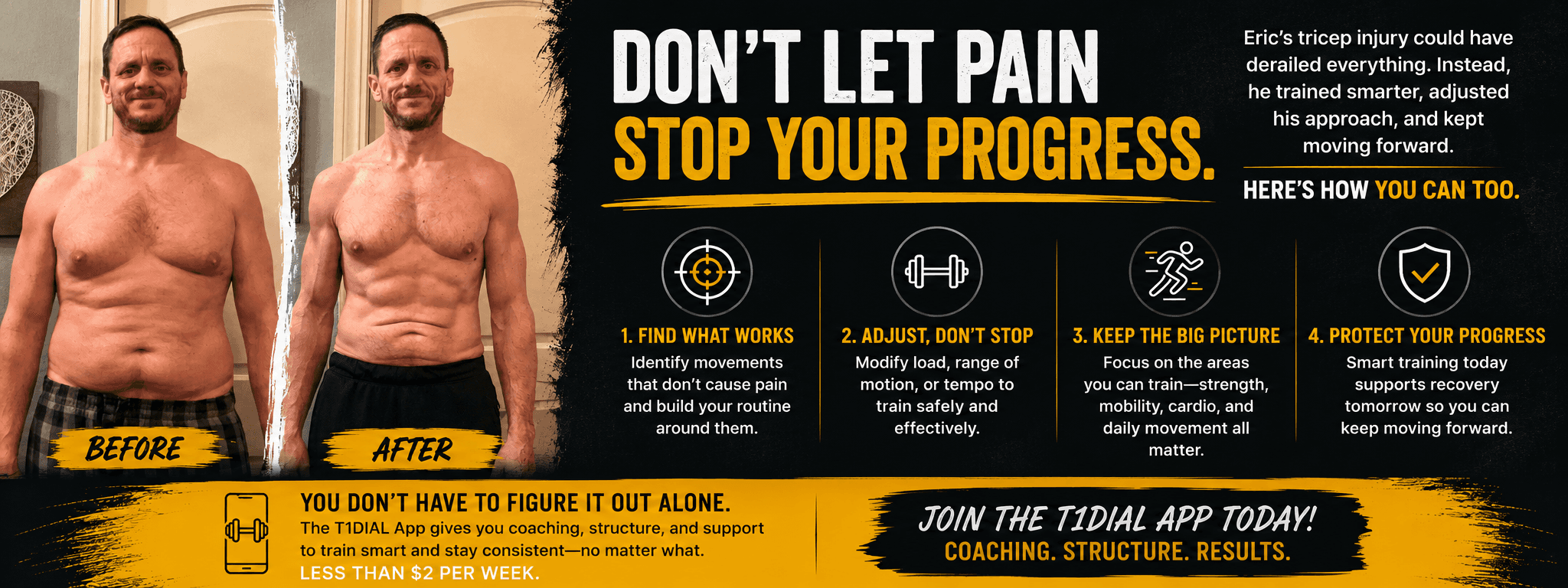
Eric didn’t stop training when his injury showed up.
But he also didn’t keep training the same way.
That’s where most people get it wrong.
They either:
• push through pain and make it worse
• or stop completely and lose momentum
There’s a better way to approach it.
The Goal Isn’t to Push Through Pain
When something starts to hurt, your goal shifts.
It’s no longer about pushing harder.
It’s about training in a way your body can tolerate.
That means:
• avoiding movements that trigger pain
• keeping movements that feel okay
• adjusting how you train instead of stopping completely
You’re not trying to win the workout.
You’re trying to stay in the game.
Step 1: Identify What Actually Hurts
Be specific.
Not everything is off-limits — just certain movements.
For example:
• pressing might hurt, but pulling feels fine
• heavy loads might hurt, but lighter controlled reps don’t
• certain angles hurt, others don’t
Find your “green light” movements.
That’s where you build from.
Step 2: Change the Way You Train
Once you know what doesn’t feel good, adjust how you train.
That can look like:
• reducing weight
• slowing down your reps
• using machines instead of free weights
• shortening range of motion
You’re still training.
Just in a way that supports recovery instead of fighting it.
Step 3: Keep the Rest of Your Routine Strong
This is where most people lose progress.
They focus so much on the injured area that everything else drops off.
Don’t do that.
If your arm hurts, you can still train:
• lower body
• core
• cardio
• daily movement
Progress doesn’t stop just because one area is limited.
Step 4: Train Around It, Not Through It
There’s a difference.
Training through pain usually makes things worse.
Training around it keeps you moving forward.
That’s what Eric did.
He didn’t force heavy lifting when it wasn’t there.
He found other ways to stay active, stay consistent, and protect his long-term progress.
What This Does for You
This approach allows you to:
• maintain your routine
• avoid losing momentum
• support recovery at the same time
And most importantly…
It keeps you from starting over.
Bringing It Back to Eric
Eric didn’t lose his progress when things changed.
He adapted.
He trained differently.
He stayed consistent.
He protected his health.
And that’s what allowed him to keep moving forward — even during a tough season.
If you want guidance on how to adjust your training and stay consistent through setbacks, the T1DIAL App gives you coaching and structure to keep progressing.
And it costs less than $2 per week.
ARTICLES


